Great knitwear earns a permanent place in a wardrobe, and thoughtful cashmere and wool care is what keeps it soft, shapely, and ready to wear. A few calm habits—rather than frequent cleaning or aggressive stain treatment—make a meaningful difference in how long your pieces look polished.
Whether you are caring for a lightweight layer or a cozy cold-weather favorite, this cashmere and wool care guide makes the process simple. Start by checking the care label, then use the gentlest method that fits the fiber, construction, and level of soil.
Cashmere and Wool Care Starts With Reading the Label
The care label is the best starting point for every garment. “Dry clean only” may reflect the garment’s lining, trim, dye, structure, or blended fibers—not just the wool itself—so follow it when it is specified. For washable knits, identify whether the piece is pure cashmere, wool, merino, or a blend before choosing water temperature and detergent.
Cashmere and wool care also means cleaning less often. Wool fibers naturally resist odors and release minor wrinkles, so airing a sweater on a padded hanger for a few hours after wearing can be enough. Spot-clean a small mark promptly with a damp white cloth, pressing rather than rubbing, and let the area dry flat.
Give new pieces a little extra attention during their first few wears. Rotate your favorite sweaters and knits instead of wearing the same one on consecutive days; rest helps fibers recover and reduces friction at the elbows, sides, and underarms.
How to Wash Wool Sweaters Without Felting or Stretching
If you are learning how to wash wool sweaters, hand-washing is the most reliable choice for delicate cashmere and fine-gauge wool. Fill a clean basin with cool or lukewarm water, add a small amount of wool-safe wash, and dissolve it before the garment goes in. Hot water and sudden temperature changes can shrink or felt animal fibers.
Turn the sweater inside out, submerge it, and gently press the water through the knit. Let it soak for about 10 minutes, then lift it with both hands and rinse in water that is close to the same temperature. Do not scrub, wring, twist, or pull at the neckline and cuffs.
For cashmere and wool care in a machine, use a mesh laundry bag and the machine’s wool, delicate, or hand-wash setting only when the label permits it. Select cold water, a mild detergent, and the lowest possible spin. Machine washing is best reserved for sturdy, clearly washable knits—not structured pieces, embellished styles, or garments with delicate seams.
- Wash similar colors together so damp fibers do not pick up stray dye.
- Use a detergent made for wool or delicates, and skip bleach and fabric softener.
- Treat deodorant, makeup, or food marks before washing by dabbing gently from the outside edge inward.
- Avoid overfilling the basin or washer, which creates unnecessary rubbing between garments.
- Wash knits inside out to protect the exterior surface from friction.
Dry and Reshape Knits the Right Way
The drying stage matters just as much as washing. After rinsing, support the wet sweater fully and press out excess water without twisting it. Lay it flat on a clean, absorbent towel, roll the towel and sweater together, and press the roll gently to remove more moisture.
Unroll the garment and place it on a fresh dry towel or mesh drying rack. Smooth the shoulders, straighten the side seams, and measure against the dry sweater if you are unsure of its original proportions. This reshaping step is a core part of cashmere and wool care because wet fibers are especially easy to distort.
Never hang a wet sweater from its shoulders, even if the hanger is padded. The weight of water can lengthen the body and pull the neckline out of shape. Keep the knit away from radiators, direct sun, and high heat; patience preserves both the hand feel and the fit.
A polished knit layers beautifully with wardrobe staples, from relaxed jeans and denim to tailored trousers. Let the sweater dry completely before wearing or folding it, since even slight trapped dampness can leave an odor or invite mildew.
Handle Cashmere Pilling and Everyday Snags Gently
Cashmere pilling is normal, especially during the first several wears. Pills form when short, loose fibers work their way to the surface and rub together in high-friction areas such as under the arms, along a crossbody strap line, or at the sides. Pilling does not automatically mean a sweater is poor quality; it is a maintenance issue that should be handled with a light touch.
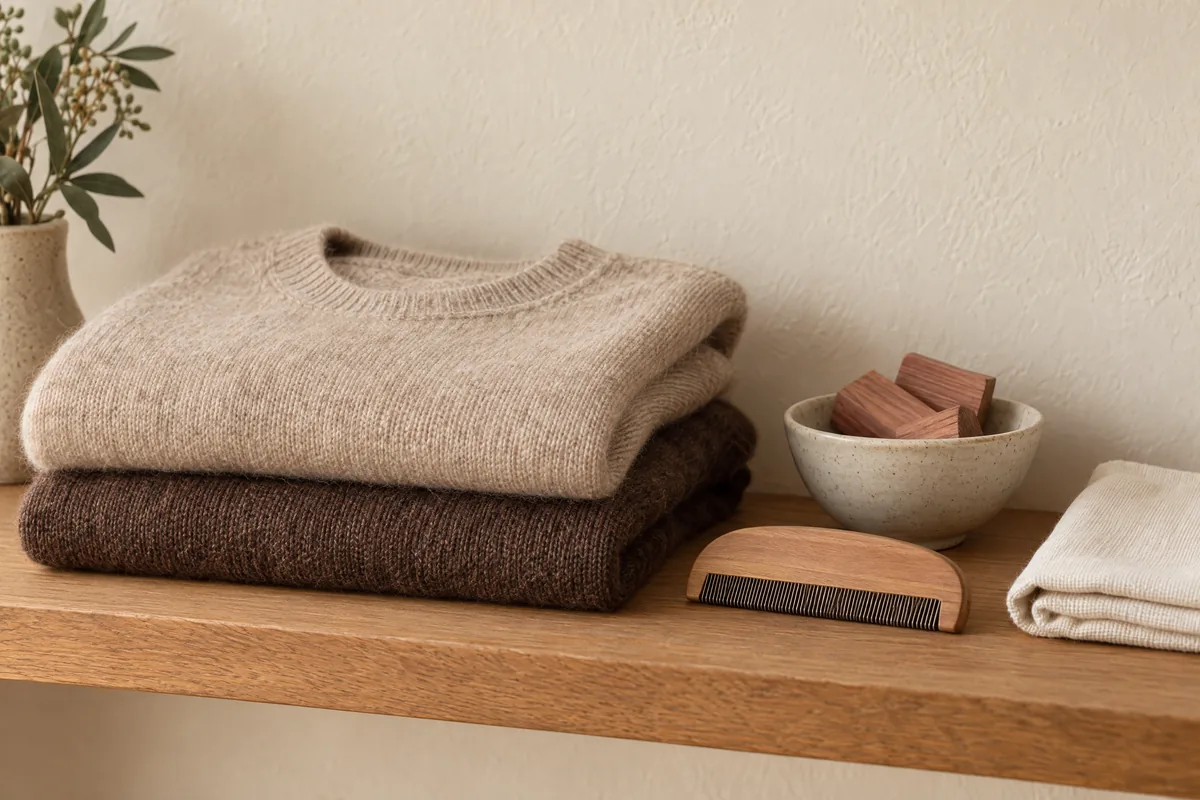
For cashmere and wool care, lay the garment flat and use a sweater comb, fabric shaver, or small pair of sharp scissors designed for lint removal. Work slowly over a taut but unstretched area, removing only the pills that sit on the surface. Do not pull pills off with your fingers, since that can tug intact fibers from the knit.
Prevent repeat friction where you can. Give a sweater a rest between wears, keep rough bag hardware from scraping the fabric, and choose a soft layer underneath when needed. Pairing fine knits with smooth tops and blouses can reduce rubbing while making transitional outfits feel more intentional.
If a thread catches, resist the urge to cut it. Ease the loop to the inside with a small crochet hook or a needle, then gently redistribute the surrounding stitches. For a large hole, a broken seam, or a snag that keeps growing, a professional repair is the smarter option.
- De-pill only when the garment is clean, dry, and laid flat on a stable surface.
- Move a fabric shaver lightly; pressing hard can thin the knit.
- Clean lint and fiber buildup from a shaver after each use so it works evenly.
- Avoid adhesive lint rollers on delicate cashmere, as repeated pulling can disturb surface fibers.
- Use a soft garment brush sparingly to lift light lint from sturdier wool pieces.
Cashmere and Wool Care for Storing Knitwear Between Seasons
Storing knitwear correctly protects the work you have already put into washing and drying it. Always clean pieces before long-term storage because body oils, food residue, and fragrance can attract pests over time. Once fully dry, fold sweaters along their natural lines rather than hanging them, which can create shoulder bumps and stretching.
For cashmere and wool care during warm months, choose a cool, dark, dry drawer, shelf, or breathable storage container. Fold loosely enough to avoid sharp creases, and avoid packing knits so tightly that they lose air circulation. If you use a storage bin, make sure the garment is completely dry before closing it.
Natural cedar blocks or sachets can help keep a storage space fresh, but they are not a substitute for clean garments and a sealed storage routine. Keep cedar from resting directly against delicate fibers, and check stored pieces every few months. When cooler days return, air the sweater out before styling it with outerwear and jackets.
Do not store fine knits in thin plastic dry-cleaning bags, which can trap moisture and yellow fabric over time. A clean cotton bag or a lined drawer is a better choice for pieces that need an extra layer of protection.
- Fold sweaters with sleeves crossed gently over the body to minimize bulk at the shoulders.
- Place the heaviest knits at the bottom of a stack and lighter cashmere pieces on top.
- Use acid-free tissue between embellished or textured garments to prevent snagging.
- Keep storage spaces away from attic heat, basement dampness, and direct sunlight.
- Inspect folded knits before each season for loose threads, pests, or lingering spots.
Build a Simple Cashmere and Wool Care Routine
The easiest routine is one you will actually follow. After each wear, air out the knit, check it for small marks, and fold it neatly once it is dry. Wash only when needed, de-pill occasionally, and repair small snags early; those small steps prevent a minor issue from becoming a reason to retire a favorite piece.
Cashmere and wool care should also fit the way you dress. Reserve your most delicate layers for lower-friction days, and choose sturdier wool for frequent travel or busy schedules. A scarf from our accessories collection can add warmth without requiring you to over-layer a delicate sweater.
When you need a fresh knit or want to compare textures in person, visit Pieces of a Dream at 2448 Central Ave, St Petersburg, FL 33712. Bringing a little intention to selection, wear, and maintenance helps every knit feel like a lasting part of your wardrobe.
Where to go from here
Good cashmere and wool care is less about complicated products and more about gentle handling: cool water, minimal friction, flat drying, and clean seasonal storage. With a consistent routine, your favorite knits can stay soft, comfortable, and easy to style year after year.
Start with one sweater this week—air it out, remove a few pills, or fold it properly—and the rest of your knitwear routine will feel far more manageable.