Knowing how to accessorize a simple outfit turns reliable wardrobe staples into looks that feel personal, polished, and ready for the day. A white top and denim, a solid-color dress, or an easy knit-and-trouser pairing can all go farther when the finishing details have a purpose.
The goal is not to wear everything at once. The best accessorizing basics help you create a focal point, add proportion, and reflect your mood while letting the outfit itself still breathe. Start with what you are wearing, then build one thoughtful layer at a time.
How to Accessorize a Simple Outfit by Starting With the Silhouette
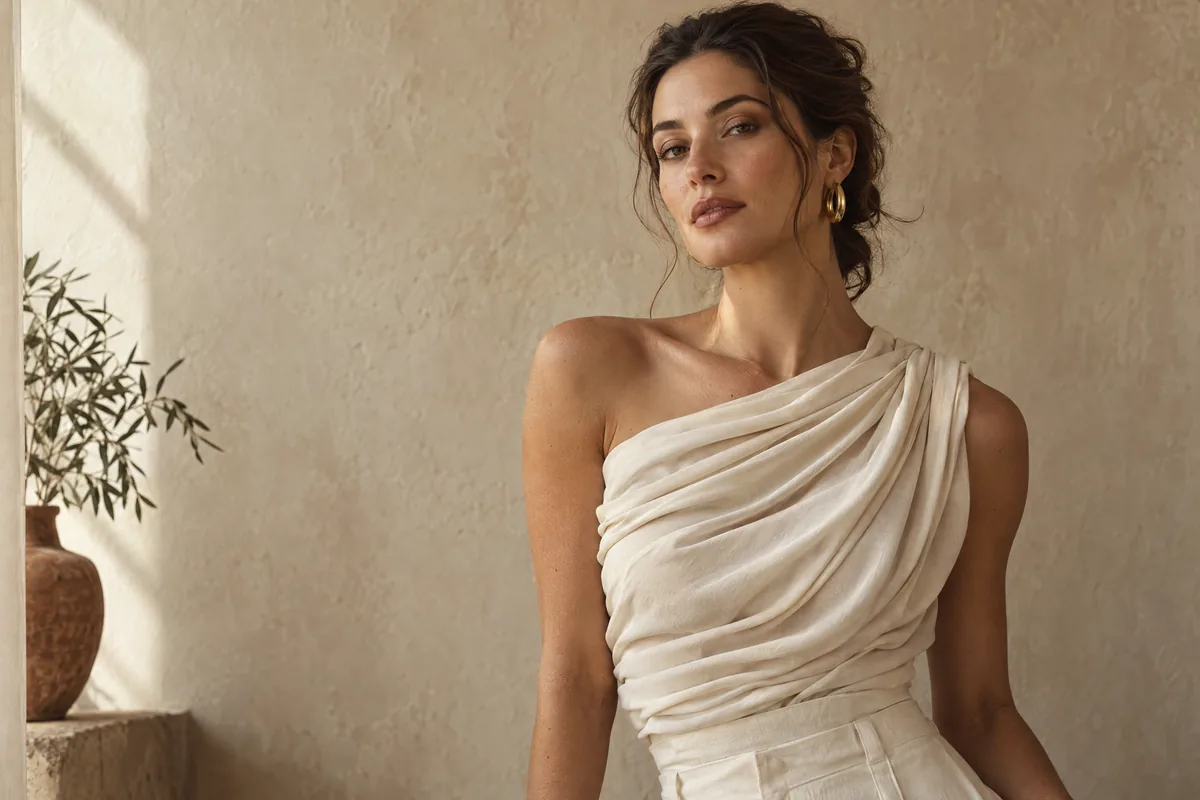
Before reaching for earrings or a handbag, look at the overall shape of your outfit. Is it fitted, relaxed, long and lean, oversized, or softly draped? How to accessorize a simple outfit becomes much easier when your accessories balance that silhouette instead of competing with it.
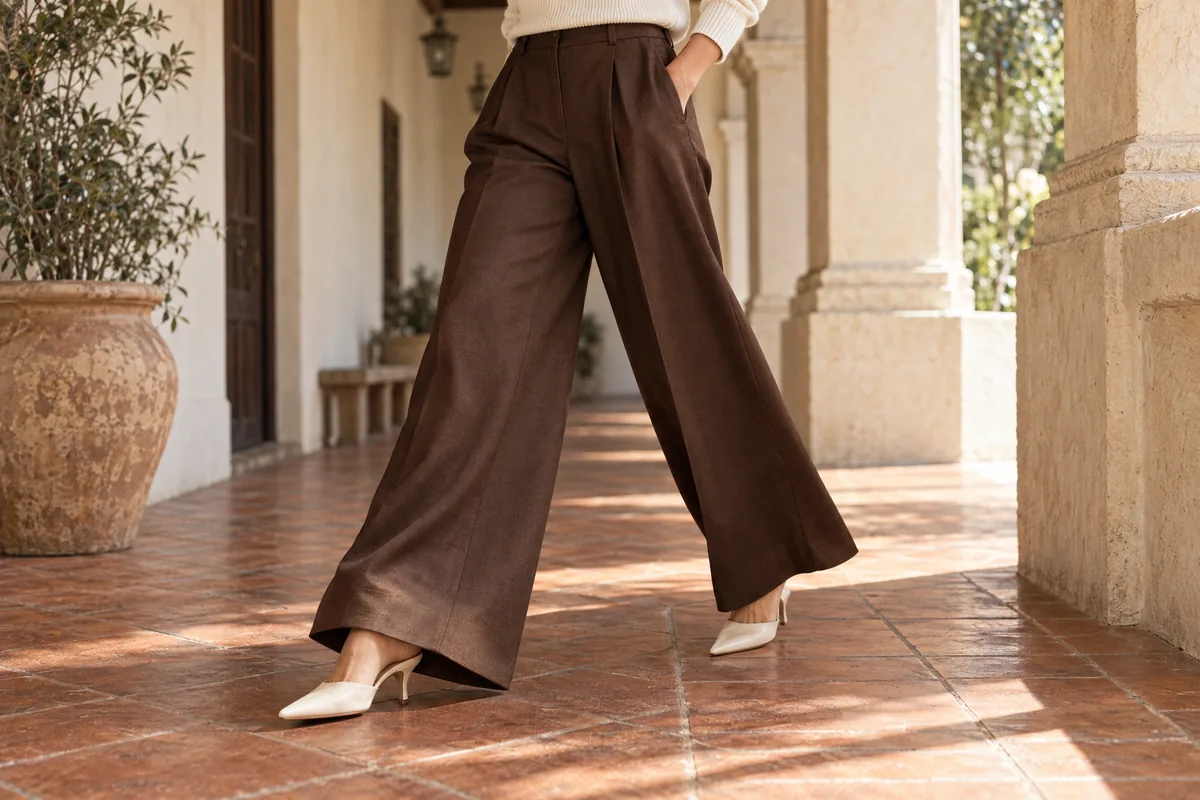
A streamlined column outfit, such as a fitted knit with straight-leg pants, often benefits from one accessory that adds shape: a structured bag, a defined belt, or a slightly bolder necklace. A fuller dress or wide-leg trouser look usually feels best with cleaner, more delicate details that do not add unnecessary visual weight.
Pay attention to where each item lands on the body. A long pendant can lengthen a high-neck top, while shoulder-grazing earrings draw the eye upward when you are wearing a simple dress. If your base layer needs more definition, begin with pieces from our accessories collection and choose the item that solves the styling need first.
For example, a relaxed button-front top with jeans may only need a tucked front, hoop earrings, and a crossbody bag. That combination gives the outfit a clear shape without making a casual look feel overdone.
- Pair a high neckline with earrings or bracelets rather than a crowded short necklace.
- Use a longer necklace to break up a solid top with a simple, uninterrupted front.
- Choose a compact bag with wide-leg bottoms to keep the proportions visually balanced.
- Add a belt when a loose dress or tunic needs a more defined waist.
- Let oversized outerwear be the volume statement and keep jewelry refined.
Build Your Look Around One Intentional Focal Point
A focal point gives simple clothing a point of view. It might be bold earrings, a colorful shoe, a sculptural bag, a patterned scarf, or one striking cuff. When learning how to accessorize a simple outfit, choose that hero piece before you add anything else.
Statement accessories work especially well with solid colors and uncomplicated lines because they have room to stand out. A black jumpsuit can support a dramatic earring, while a neutral sweater and denim pairing can carry a bright bag or distinctive shoe. The rest of your accessories should support the focal point, not try to outshine it.
Use the one-and-one rule when you are unsure: one statement piece and one subtle supporting detail. For instance, pair expressive earrings with a minimal ring, or a standout necklace with a clean, unfussy bag. This keeps the finished look intentional rather than accidental.
If your outfit already includes texture, print, ruffles, or strong hardware, scale back. A printed dress may need only simple earrings and shoes from our shoe collection, allowing the clothing to remain the main event.
Use Jewelry Styling Tips to Create Balance and Dimension
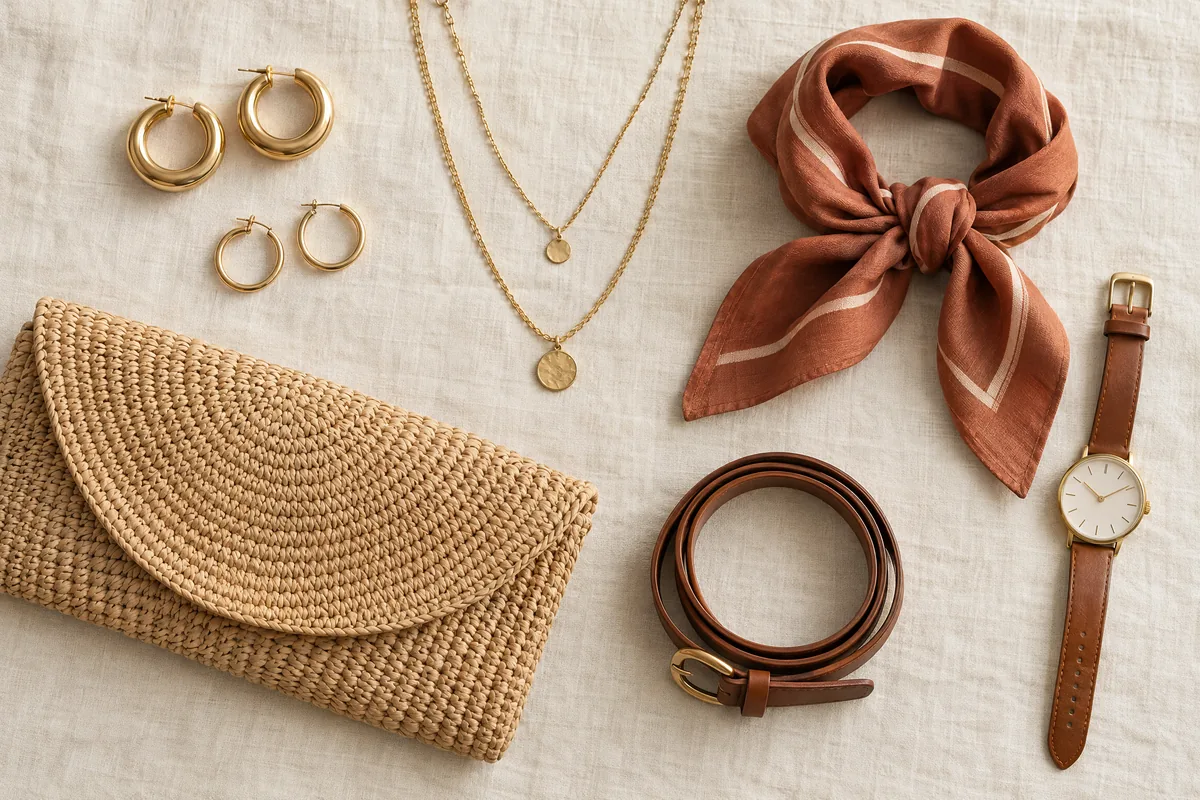
Jewelry is one of the most flexible ways to change the mood of basics. The right jewelry styling tips begin with matching scale to the outfit: small, clean pieces feel elegant with tailored layers, while bolder shapes can energize casual denim, simple knits, and solid dresses.
Think in zones rather than treating every jewelry category as mandatory. The neckline, ears, wrists, and hands are separate opportunities, but you do not need to fill each one. If your necklace is layered or bold, let the earrings be quiet; if your earrings are the moment, skip the necklace and add a ring instead.
How to accessorize a simple outfit also depends on the neckline. Crewnecks pair beautifully with a pendant or a slightly longer chain, while V-necks can frame a delicate necklace that echoes the angle of the neckline. With a collar or mock neck, earrings, rings, and bracelets usually make a stronger impact than a necklace tucked out of sight.
Mixing metals can look modern when it is done with restraint. Repeat each metal at least once, such as a gold-tone necklace with a gold-tone ring alongside silver-tone hoops, so the combination appears chosen rather than random. A pared-back foundation from our tops and blouses collection makes these small jewelry choices especially visible.
- Match a short necklace to an open neckline instead of layering it over a high collar.
- Wear larger earrings with pulled-back hair when you want them to become the focal point.
- Stack slim bracelets only when your sleeves leave enough wrist visible.
- Choose rings with different widths but a shared finish for an easy, cohesive stack.
- Keep jewelry cleaner around ornate sleeves, embellished necklines, or busy prints.
Finish With Shoes, Bags, and Layers That Change the Mood
Shoes and bags are not afterthoughts; they set the formality and energy of the whole outfit. The same jeans and top can read relaxed with flat shoes and a soft tote, or more directional with a heeled boot and structured shoulder bag. This is one of the quickest ways to understand how to accessorize a simple outfit for different plans.
Start by deciding how you want to feel in the look: comfortable, polished, playful, understated, or ready for an evening out. Then choose footwear that supports that feeling. A sleek shoe can sharpen easy denim from our jeans and denim collection, while a casual shoe can make a dress feel more everyday.
Outerwear can act like an accessory when it adds color, structure, or texture. A cropped jacket gives shape to a flowing dress, while a long layer creates a clean vertical line over a fitted base. Consider the jacket part of the composition, not merely something to throw on at the door.
Bags should offer contrast in either shape or finish. With soft, relaxed clothing, a more structured bag adds polish. With tailored trousers and a crisp top, a slouchier bag can keep the outfit approachable.
Coordinate Color, Texture, and Proportion Without Matching Everything
The easiest accessorizing basics are built on coordination, not exact matching. Rather than trying to make every item the same color, repeat one tone or finish in two places. A warm neutral bag can relate to a shoe, or a rich color in a scarf can echo a subtle shade in your earrings.
Texture matters just as much as color. If your outfit is smooth and minimal, a woven bag, textured shoe, or layered chain can add interest. If you are wearing a chunky knit, pleated skirt, or detailed jacket, smoother accessories prevent the look from becoming too busy.
How to accessorize a simple outfit with color also means knowing when to stay tonal. Wearing several shades from the same color family creates a refined effect, especially with a simple monochrome dress or matching set. Add a contrasting accessory only if you want a clear, deliberate pop.
Proportion is the final check. A large tote may overwhelm a petite, fitted outfit, while a tiny bag can disappear next to wide-leg pants or oversized outerwear. Try on the full outfit, step back from the mirror, and adjust the piece that feels out of scale rather than adding more.
- Repeat a color from your outfit in one accessory instead of matching every piece exactly.
- Use a textured bag or shoe to add interest to a smooth, all-solid outfit.
- Choose tonal accessories when you want a calm, lengthening effect.
- Balance a large bag with substantial shoes or a fuller silhouette.
- Use one contrasting color at a time when your outfit is mostly neutral.
How to Accessorize a Simple Outfit for Real Life
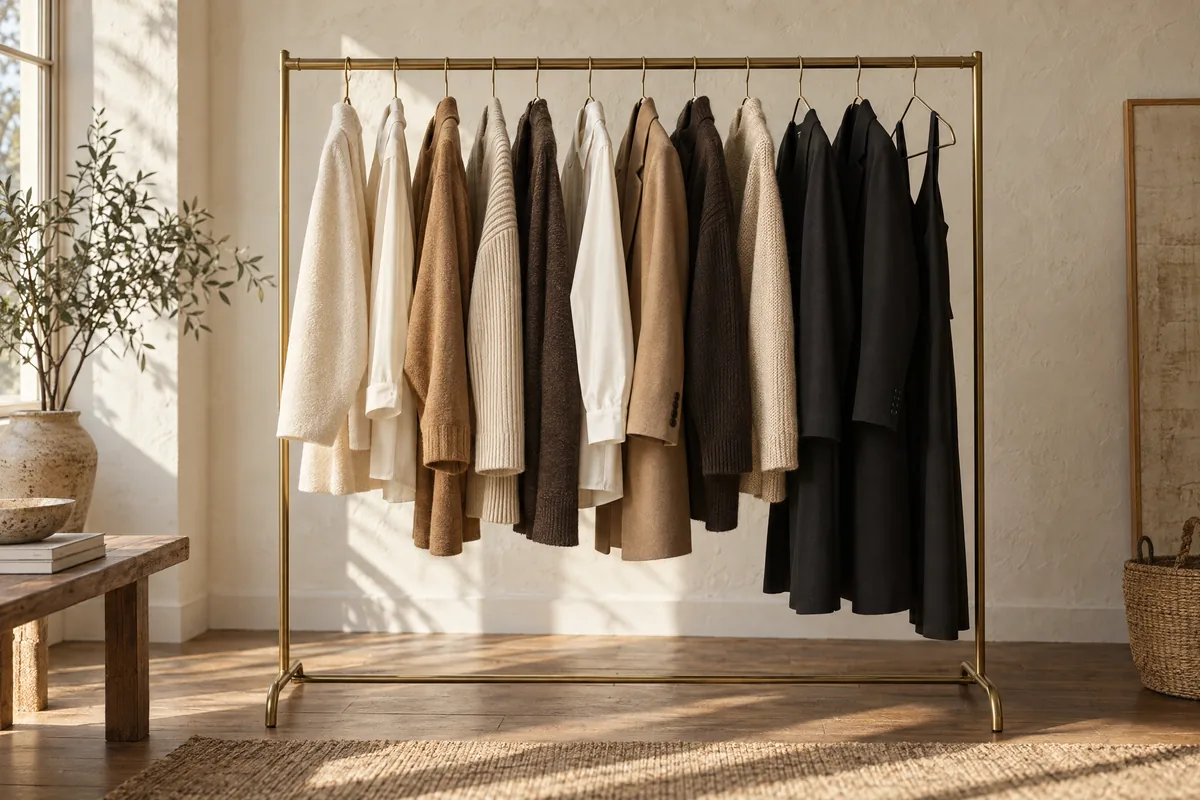
The most useful answer to how to accessorize a simple outfit is to create a small, dependable finishing routine. Begin with your clothing, select a focal point, check the silhouette, and add only what improves the look. This approach saves time and helps you get more wear from the pieces you already love.
For work or daytime plans, keep your accessory mix edited: a practical bag, comfortable shoes, and one jewelry category are often enough. For dinner, an event, or a date, shift the emphasis with statement accessories such as a bolder earring, a more defined bag, or a jacket that changes the mood of the same base outfit.
Experiment at home before you need to leave. Photograph two or three versions of an outfit, then notice which one has the clearest focal point and the best balance. When you find combinations that work, make a note so getting dressed feels easier next time.
A simple dress is an especially adaptable canvas: wear it with minimal pieces during the day, then change the shoes, bag, and jewelry for a different finish. Explore our dresses collection when you want an uncomplicated base that can be styled several ways, or visit Pieces of a Dream at 2448 Central Ave, St Petersburg, FL 33712 to try ideas in person.
Where to go from here
Learning how to accessorize a simple outfit is less about following rigid rules and more about making purposeful choices. Use one focal point, balance the silhouette, and let color, texture, shoes, bags, and jewelry work together.
Start small, trust what feels like you, and build from there. The most memorable outfits often begin with the simplest pieces and the right finishing details.