Choosing between a maxi vs midi dress is less about following a rule and more about understanding how each hemline moves, fits, and supports your day. Both silhouettes can feel polished, comfortable, and expressive; the right one depends on your height, shoes, setting, and personal style.
A midi creates a defined break around the lower leg, while a maxi brings fuller coverage and a longer visual line. Use this comparison to shop with clarity, then explore our dress collection with a better sense of which length belongs in your closet.
Maxi vs Midi Dress: Start With the Hemline
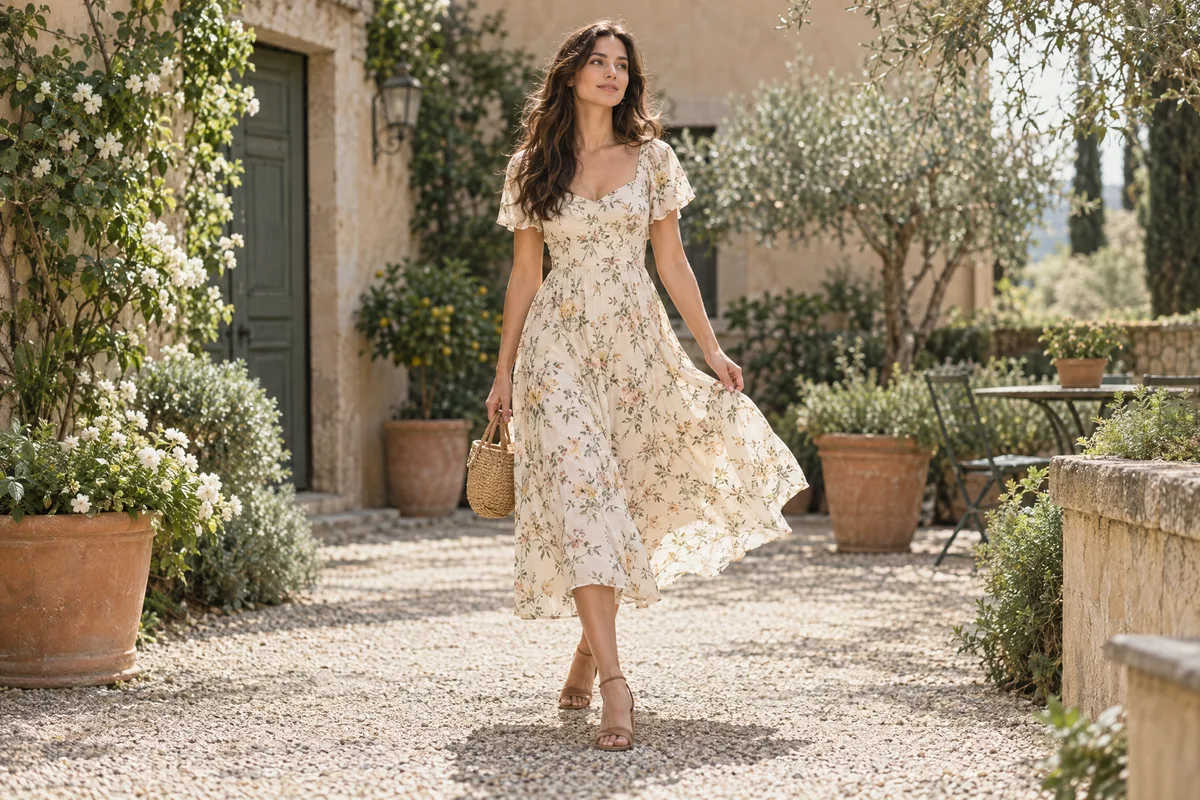
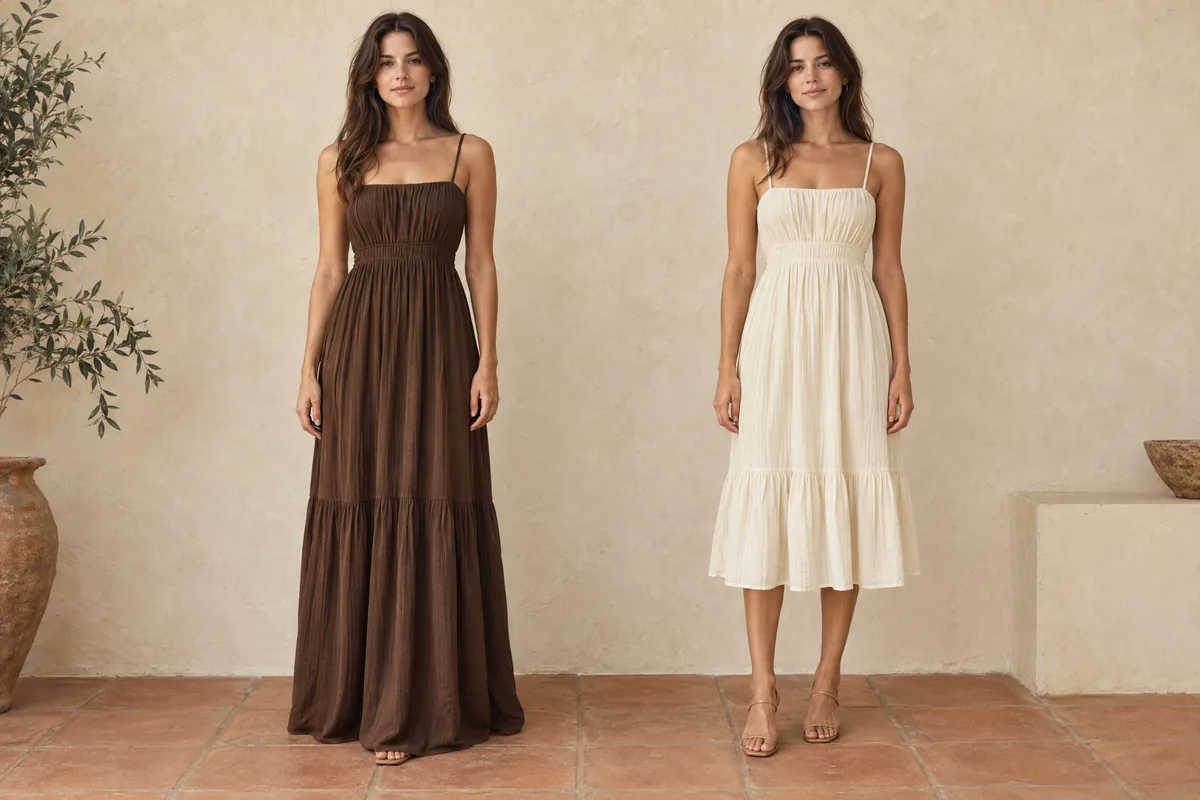
The clearest difference in a maxi vs midi dress is where the hem lands. A midi usually falls below the knee and above the ankle, often around the mid-calf. A maxi generally reaches the ankle, top of the foot, or just above the floor, depending on the cut and your height.
That distance changes more than coverage. A midi shows the lower leg and puts your footwear in view, which can make it a versatile choice for everyday outfits. A maxi creates an uninterrupted column of fabric, delivering a softer, more sweeping effect that can feel relaxed or elevated based on its material and details.
For an accurate dress length comparison, try dresses on with the shoe height you expect to wear most often. A hem that looks intentionally ankle-skimming in flats can become too short with heels, while a floor-grazing maxi can be difficult to manage if it pools at the back.
- A true midi commonly ends from a few inches below the knee to the lower calf.
- An ankle-length maxi should clear the ground enough to walk comfortably without stepping on the hem.
- A high-low or side-slit style may read longer overall while still showing more leg in motion.
- Petite shoppers may find that a maxi fits closer to full length, while a midi may land lower on the calf.
- Tall shoppers can use ankle boots or statement shoes to make a shorter-leaning maxi feel intentional.
Maxi vs Midi Dress: Proportion, Fit, and Movement
In a maxi vs midi dress decision, proportion matters as much as the label on the tag. A maxi lengthens the visual line, especially with a column shape, monochrome color, or an empire waist. A midi creates a horizontal point at the calf, so waist definition, neckline, and shoe choice become especially helpful for balancing the look.
Neither length is limited to a particular body type. Instead, focus on where the dress defines your shape and how freely you can move. A fitted bodice with a fluid skirt gives a maxi structure, while a wrap, smocked, belted, or tailored midi can create a clear waist without sacrificing ease.
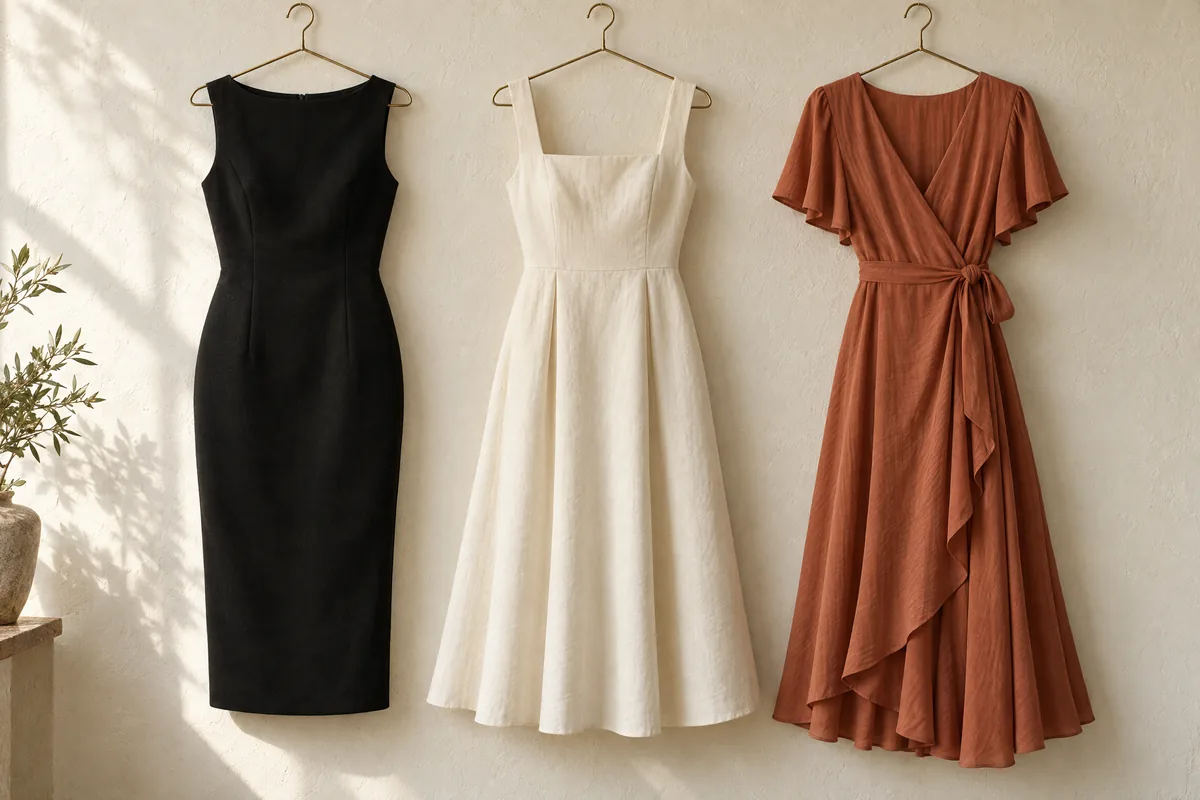
Fabric also determines how the hem behaves. Crisp cotton or poplin holds a more architectural midi shape, while knits, satin, and lightweight woven fabrics can give a maxi graceful movement. If you want options beyond dresses for the same polished, one-piece feel, browse jumpsuits and sets.
Pay attention to the highest-volume point of the garment. A tiered or full maxi pairs beautifully with a closer-fitting top section, whereas a straighter midi can handle a slightly roomier sleeve or a more detailed neckline. The goal is not to minimize your shape; it is to choose a silhouette that feels balanced and easy to wear.
- Choose a defined waist or a belt when you want to add structure to a flowing maxi.
- Pair a calf-length midi with a shoe that shows the ankle or top of the foot for a lighter visual finish.
- Use a side slit, wrap front, or button detail when you want extra movement in a longer hemline.
- If a dress is voluminous from shoulder to hem, consider a simpler accessory and sleeker shoe.
- Sit, walk, and take a full stride in the fitting room to make sure the hem feels practical.
A Midi Dress Length Guide for Everyday Styling
A practical midi dress length guide begins with the calf. Because this area can be a visual focal point, the exact landing spot makes a difference. Many people prefer a hem that falls at a narrower part of the lower leg or that includes a slit, wrap opening, or asymmetrical line to keep the silhouette moving.
For workdays, brunch, errands, and casual dinners, a midi is often the easiest answer in a maxi vs midi dress comparison. It provides enough coverage for changing temperatures while keeping the outfit less formal than a full-length dress can sometimes feel. It also works naturally with sandals, sneakers, loafers, ankle boots, and low heels.
Think about the dress shape before choosing your layers. A slip-style midi may need a cropped jacket or light knit to preserve the waist, while a shirt-dress midi can carry a belt and a longer layer. For pieces that add warmth without overwhelming the hem, see outerwear and jackets.
Color and print can shift the mood quickly. A solid midi is a flexible foundation for bold earrings or a patterned shoe, while a printed midi can be the outfit’s focal point with simple accessories. Keep the scale of your accessories aligned with the dress: fine straps and smaller bags feel refined, while substantial boots or a wider belt add edge.
- Wear clean white sneakers with a casual midi for a polished, walkable daytime outfit.
- Choose ankle boots that meet or sit close to the hem when you want less skin showing in cooler weather.
- Try a pointed-toe flat or low heel to create a longer-looking line beneath a midi.
- Add a cropped denim-style layer or tailored jacket rather than a long coat that competes with the hem.
- Use a belt at your natural waist if a straight midi feels too loose through the middle.
When to Wear a Maxi Dress—and When a Midi Works Better
Knowing when to wear a maxi dress comes down to comfort, atmosphere, and how much coverage you want. A breezy maxi is a natural option for warm days, outdoor gatherings, travel, and occasions when you want an outfit with presence but do not want restrictive tailoring. In a refined fabric or a more streamlined shape, it can also feel appropriate for dinners, celebrations, and dressier plans.
A midi often wins when your day includes a lot of walking, stairs, a commute, or a setting where you want your shoes to do some of the styling work. In the maxi vs midi dress conversation, a midi tends to feel more adaptable across daytime settings because it is less likely to catch on uneven pavement or chair legs. That said, a well-fitted maxi with the right clearance can be just as functional.
Weather deserves consideration, too. A maxi adds coverage when an evening breeze arrives, but it can feel heavy in peak heat if the fabric is dense. A midi offers airflow around the ankles and is easy to layer over with boots, a jacket, or soft knits from our sweaters and knits.
For an event, read the invitation and the venue rather than relying on length alone. A simple maxi can be casual, and a sharply cut midi can look especially dressed up. Fabric, finish, accessories, and grooming set the final tone.
- Choose a lightweight maxi for an outdoor daytime event where sun coverage and ease matter.
- Reach for a midi when you expect to walk several blocks or move between indoor and outdoor plans.
- Wear a streamlined maxi with low-profile sandals for a relaxed vacation or resort-inspired outfit.
- Select a polished midi with heeled shoes and intentional jewelry for a dinner or celebration.
- Keep a longer hem off wet or uneven ground unless you can comfortably hold it while walking.
Maxi vs Midi Dress Shoes, Layers, and Accessories
Shoes are one of the quickest ways to settle a maxi vs midi dress choice. Since a midi exposes more of the leg and footwear, shoes become an obvious part of the outfit. A maxi hides more of the shoe, so the toe shape, sole, and overall proportion matter more than decorative details that may not be visible.
With a midi, nearly every shoe category has a role. Flat sandals keep the look easy, boots add contrast, and a sleek heel can sharpen the silhouette. Shop shoes with the dress hem in mind, and consider whether the shoe cuts across the ankle or creates a continuous line from leg to toe.
Maxis pair well with sandals, wedges, boots, and low heels that provide enough lift for the hem to move freely. Avoid choosing a shoe solely for height, though. You should be able to walk naturally without lifting the skirt constantly, especially during an event or a long day out.
Accessories can guide both lengths toward your own style. A compact crossbody and simple hoops keep a printed midi casual, while a structured bag and bolder jewelry can make a column maxi feel occasion-ready. Explore accessories to finish the look without crowding it.
- Match a midi with ankle boots when you want a grounded, transitional-season outfit.
- Use a nude-to-you or low-vamp shoe with a midi if you prefer a more continuous-looking leg line.
- Choose a stable block heel or platform only if it keeps a maxi hem clear of the ground.
- Keep necklaces shorter with high-neck maxis so they complement the neckline instead of disappearing into fabric.
- Balance a dramatic maxi print with one or two simple accessories rather than several competing pieces.
How to Choose Between a Maxi vs Midi Dress
The best maxi vs midi dress is the one that suits the plans already on your calendar and makes you feel like yourself. Start with the practical questions: Will you be standing, sitting, walking, traveling, or spending time outdoors? Then consider the mood you want—clean and tailored, romantic and flowing, casual and effortless, or dressed up with a little drama.
If you are building a versatile wardrobe, include at least one dependable option in each length. A comfortable midi can serve casual days and more polished moments with a change of shoes, while a maxi gives you an easy statement silhouette when you want coverage and movement. This is a dress length comparison worth making in front of a mirror, not just from product photos.
Try to judge fit from every angle. Check that the shoulder straps or sleeves stay in place, the waist sits where you like it, and the hem feels right with your preferred shoes. If you are shopping in St. Petersburg, you can also visit us at 2448 Central Ave, St Petersburg, FL 33712 to see how different lengths feel in person.
Ultimately, a maxi vs midi dress choice does not need to be permanent or restrictive. Let the season, the occasion, and your styling instincts lead. A dress that lets you move comfortably and feel confident will always earn more wear than one chosen only because it follows a trend.
- Pick a midi first if you want one dress that easily shifts from errands to dinner.
- Pick a maxi first if you gravitate toward long, flowing silhouettes and fuller coverage.
- Bring or wear the shoes you use most often when trying on either dress length.
- Prioritize a hem that feels manageable for your usual routes, transportation, and plans.
- Save dress photos with looks you would actually wear, then look for the length and styling details they share.
Where to go from here
A thoughtful maxi vs midi dress choice begins with hem placement but ends with how the dress supports your real life. Midis make footwear and everyday versatility part of the statement, while maxis offer length, movement, and effortless presence.
Use this midi dress length guide and occasion advice as a starting point, then choose the fit, fabric, and finishing pieces that make the silhouette your own. The most useful dress is the one you will be excited to wear again and again.